Tysons TDM Links
Transportation Demand Management
Links for the Tysons TDM Subcommittee
Transportation Plan Info
TDM Definitions
Resources
Recent TDM Examples in Fairfax County
Washington Area Commuter Support Sites
Bicycling Tysons
Car Sharing
Transportation Plan Info
TDM Definitions
Resources
- Washington State TDM Guide for Planners. Chapters are in PDF.
- Online TDM Encyclopedia, Victoria Transport Policy Institute
Planning and Implementation
Why Manage Transportation Demand
Successful TDM programs
Parking Solutions
Congestion Reduction Strategies
Walking and Cycling Encouragement
Road Space Reallocation
- Washington State Commute Time Reduction Program—The goals of the program are to reduce traffic congestion, reduce air pollution, and petroleum consumption through employer-based programs that decrease the number of commute trips made by people driving alone.
- Public Agency and Employer Guidance on Transportation Demand Management Programs, Transportation Research Board of the National Academies - The Transportation Research Board (TRB) is a division of the National Research Council.
- Cost-Effectiveness of Transportation Demand Management (TDM) Strategies, Transportation Research Board of the National Academies
- Bacons Rebellion: Traffic Demand Management—Does Virginia face untold billions of dollars in "unmet transportation needs"? Only if you ignore innovative experiments in traffic demand management bubbling out of Northern Virginia.
- EFFECT: Environmental Forecasting For the Effective Control of Traffic—The Instrumented City is a facility of the Institute for Transport Studies at the University of Leeds. It offers an extensive range of archive traffic and pollution data for several UK cities.
- Atlanta TDM Research—Research goals: 1. To enhance the media campaign program area; 2. To evaluate the qualitative and quantitative impacts of each of the three program areas (media campaign, employer and individual outreach services, and regional supporting programs and services); and 3. To establish a consistent evaluation protocol and reporting procedure across the program areas.
- Riverside County, CA Transportation Plan—How will the County deal with a rapidly growing population and its ever increasing need for better transportation?
- Arlington Co Transportation Demand Management (TDM) Program for Site Plan Development— Includes a copy of the 1990 TDM Policy used for site plan evaluation
- City of Arlington Transportation Management Plans—The Transportation Management Plans (TMPs) are now part of the City of Alexandria Zoning Ordinance. The ordinance was enacted by City Council on May 16, 1987 to offset the traffic impact of new developments. The ordinance requires that projects of a certain size submit a special use permit application which must include a traffic impact analysis and a transportation management plan.
- Public Agency Guidance on Employer-Based TDM Programs[large PDF file]—prepared for the Transit Cooperative Research Program of the National Academy Transportation Research Board
- Common Transportation Demand Plan Elements—Community Development Department, City of Cambridge, Massachusetts
- Florida TDM Clearinghouse—Center for Urban Transportation Research, University of South Florida
- La Verne, California Code on TDM—Chapter 18.74 of the zoning code.
- TDM in Europe: A synthesis of research findings—“TDM is integrated into national transport policy in Europe, whereas in the U.S., TDM is only locally focused and operated for congestion relief and air quality management. Finally, TDM in Europe is marketed as a responsible lifestyle choice rather than as an alternative.”
- Puget Sound RideMatch Service—Interactive system to find out the location of others who want to use carpools and vanpools.
- Capital Beltway Study—Includes proposal for HOV lanes on the Beltway in Virginia.
- I-66 Multimodal Transportation and Environmental Study—from the Beltway west.
- Community Bicycle Programs—“Community bicycle programs (also known as Yellow bicycle programs or White bicycle programs) are one variation on an international movement to provide environmentally friendly transportation options to citizens.” Includes a list of community bike programs
- WMCOG Regional Congestion Management Program—The Congestion Management Process is a systematic set of actions to provide information on transportation system performance, and to consider alternative strategies to alleviate congestion, enhancing the mobility of persons and goods.
- Department of Rail and Public Transit's Telework!VA business incentive program—The Telework!Va Program provides incentives for Virginia businesses to establish or expand telework programs for employees. The program goal is to provide more opportunity for participation in teleworking.
- Springfield Interchange Construction Project—New CMP programs will come on line with the construction of Beltway HOT Lanes, I-95/395 HOT Lanes, and I-66.
Recent TDM Examples in Fairfax County
Washington Area Commuter Support Sites
- TYTRAN—“Current Commuter program elements include carpool and vanpool matchlist generation; provision of transit schedules and itineraries; general alternative transportation information; air quality and trip reduction educational program information; a guaranteed ride home program; and a quarterly Commuter News publication for employees.”
- LINK—is funded by the Reston Town Center Association. It provides bus schedules, both online and paper, an online business and retail locator that identifies nearby bus routes, carpool and vanpool ridematching through Commuter Connections
- Commuter Connections— funded by the Metropolitan Washington Council of Governments. Provides support for alternative transportation modes including the Guaranteed Ride Home program and the Bicycling Guide, the Commuter Bulletin Board, a Ridesharing program.
- Fairfax County's RideSources Carpool/Vanpool Assistance—The RideSources program provides commuters with free ridesharing information, including ridematching assistance to form or join carpools or vanpools.
- Arlington's Commuter Page— provides “Transportation options for the Washington, DC area.”
- Dulles Area Transportation Association— known by it's acronym DATA. “Seeking solutions to traffic congestion by achieving
an integrated multi-modal system in the greater Dulles area.”
- MWCOG Bicycling Guide—Effective strategies by employers and employees to encourage bicycle commuting.
- Washington Area Bicyclist Association—Information resources for bicyclists, including the Commuter Mentor program.
- Fairfax Advocates for Better Bicycling—Local bicycle advocacy group “who want to make bicycling an integral part of the transportation network of Fairfax County, Virginia.”
Bicycling Tysons
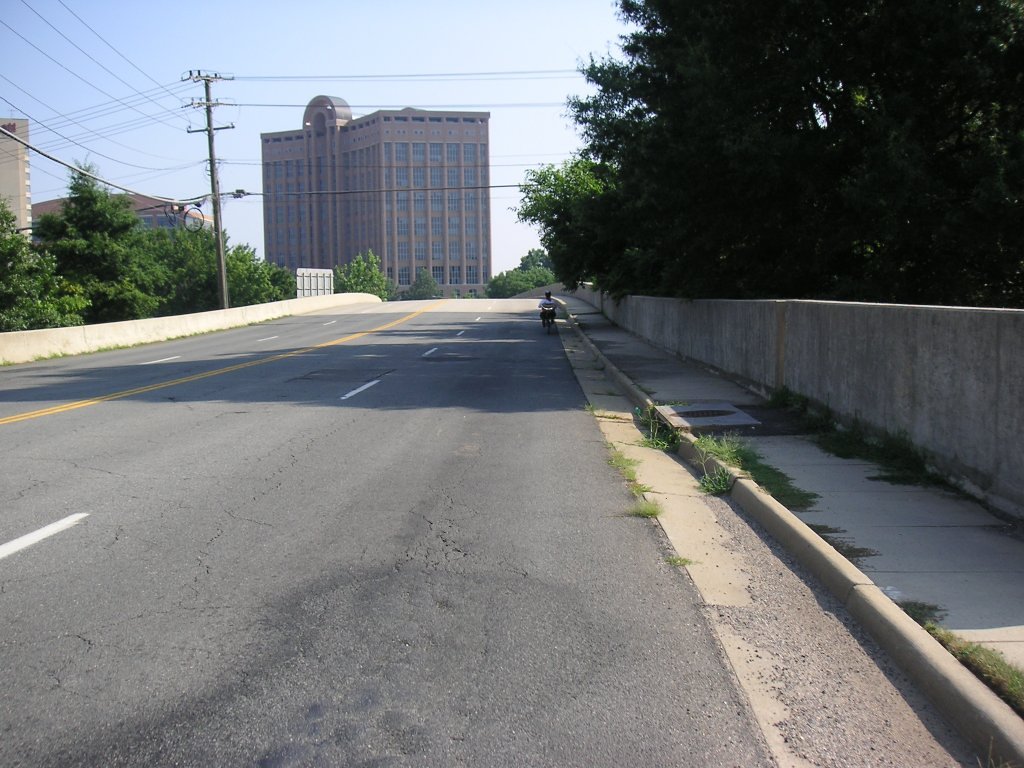
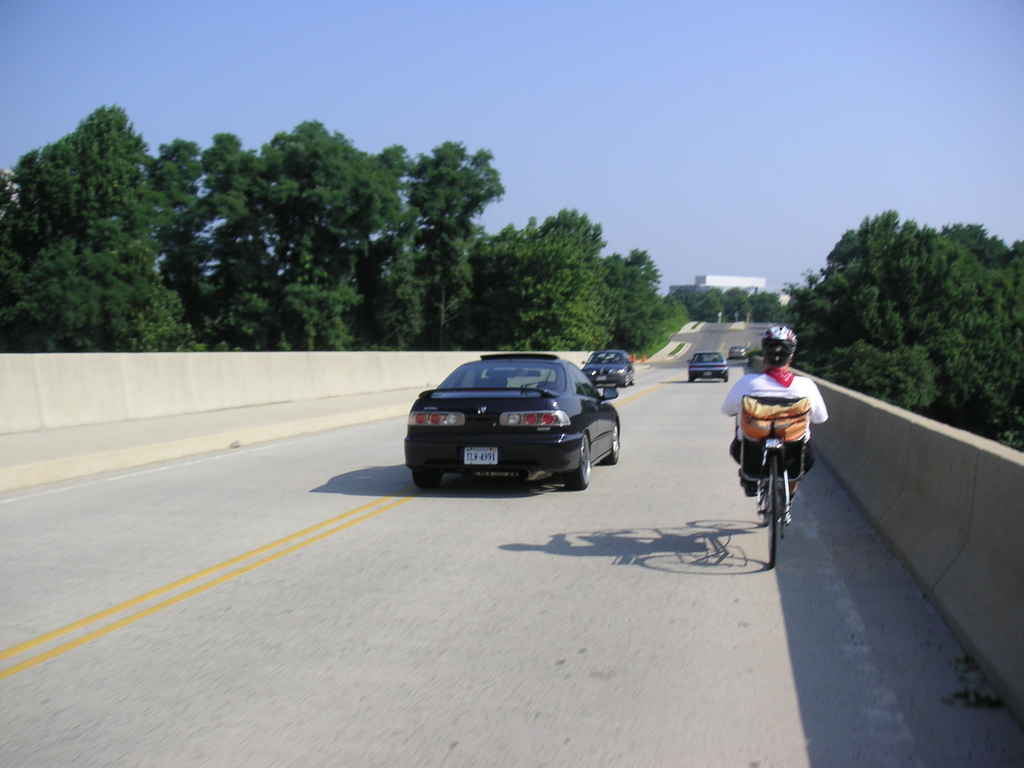
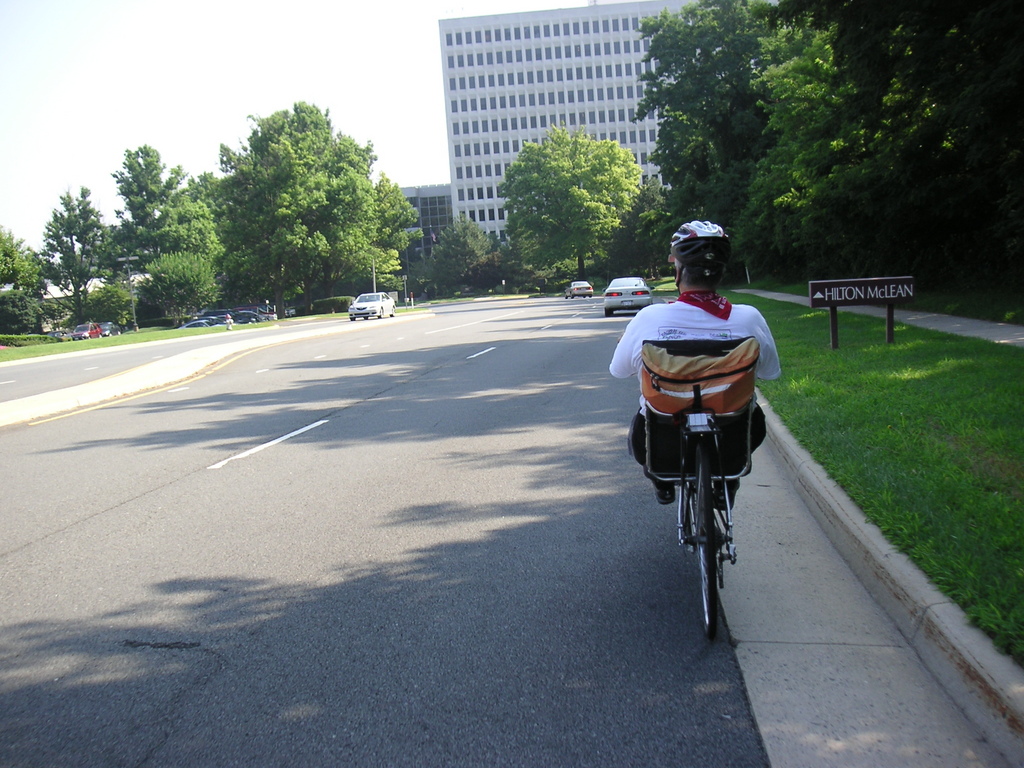
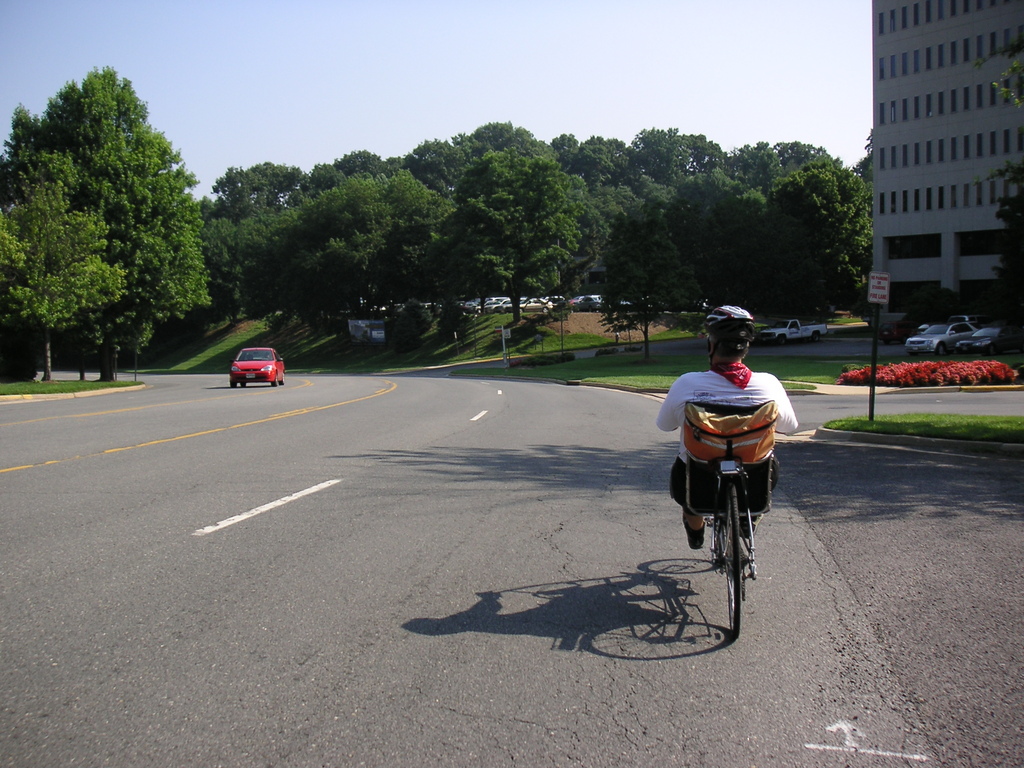
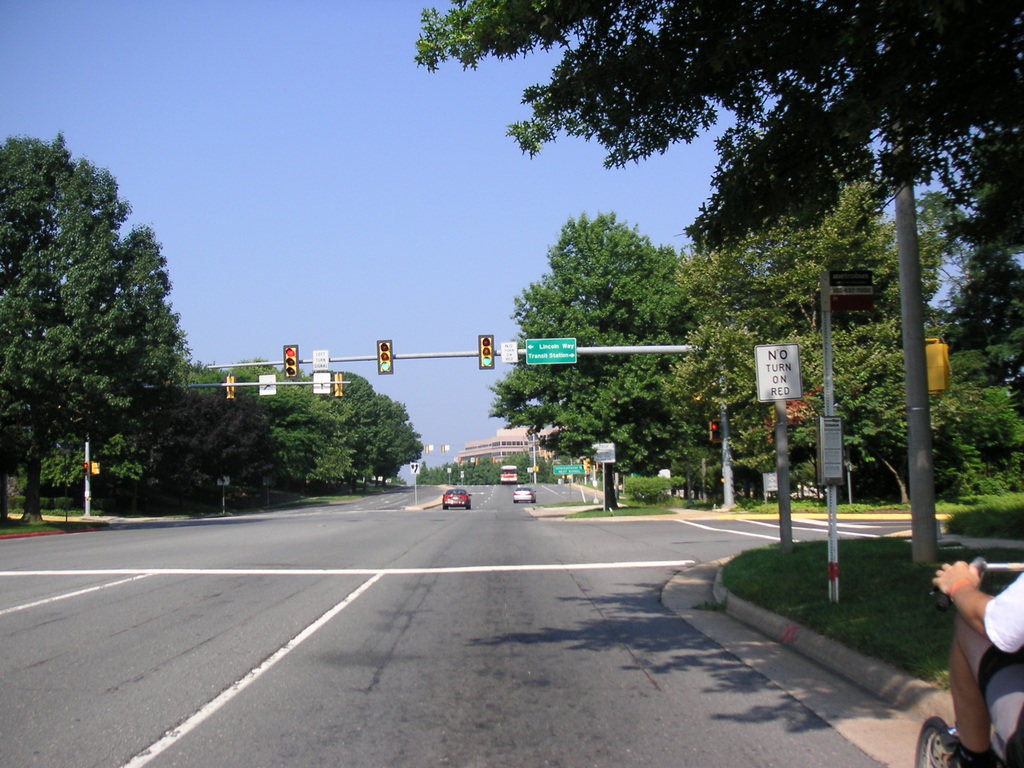
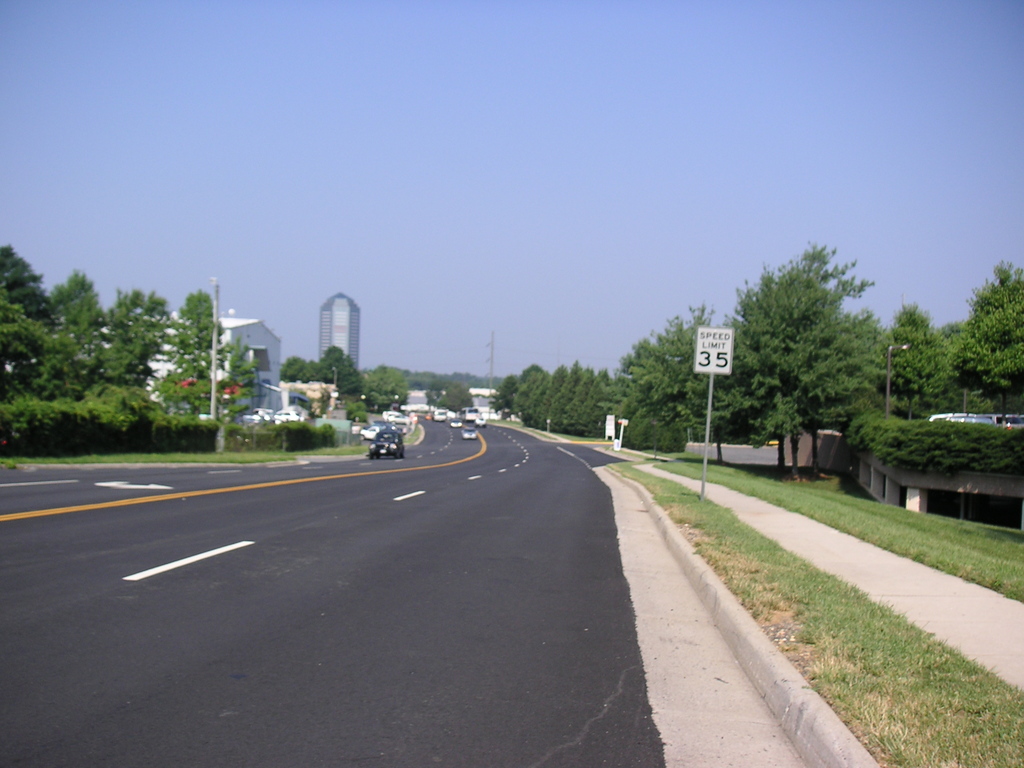
- Tysons Bike Tour—Photos linked to a map from a bicycle tour of the Tysons area in July, 2005. Contrary to conventional wisdom, many streets in Tysons are currently bike-friendly. This route enters the Tysons area from the south at Gallows Road, where there is an 8' asphalt trail and several side streets that lead to Tysons. It continues across the bridge over Route 7, along the Tysons Corner Mall ring road, across Route 123 to Westpark Dr. to Jones Branch Dr. The route continues past the Tysons Transit Station, along Tyco Rd., across Route 7 at grade to Westwood Dr. There is a little-known connection into Tysons from the many neighborhoods that connect to Montmorency Dr. and Palm Springs Dr.
Note the width of the roads and the lack of traffic between 9:00 a.m. and 10:30 a.m. Many of the streets have a wide turn lane. These streets could easily, today, be restriped with slightly narrower lanes and bike lanes or wide curb lanes could be added for bicyclists.
- DC DOT Bicycle Program—Includes bicycle parking guidelines [PDF] and bicycle rack design [PDF] documents.
Car Sharing
- Zipcar—is a carsharing service available inside the Beltway along the Ballston corridor and other Metro locations.
- Flexcar—provides a service similar to that of Zipcar, located in similar locations although it extends as far as the Vienna Metro station.