Professional Repair and
Shop Operation Class
Monday, November 28, 2005
Measuring Tools, Torque, and Wheel Components
Previous | NextOne thing we learned early at UBI; class starts at 8am sharp. Don't be late or you'll hear about it. Most of us arrived early in order to check in and pay the balance due on tuition ($1250 was the total cost of the class).
 |  |
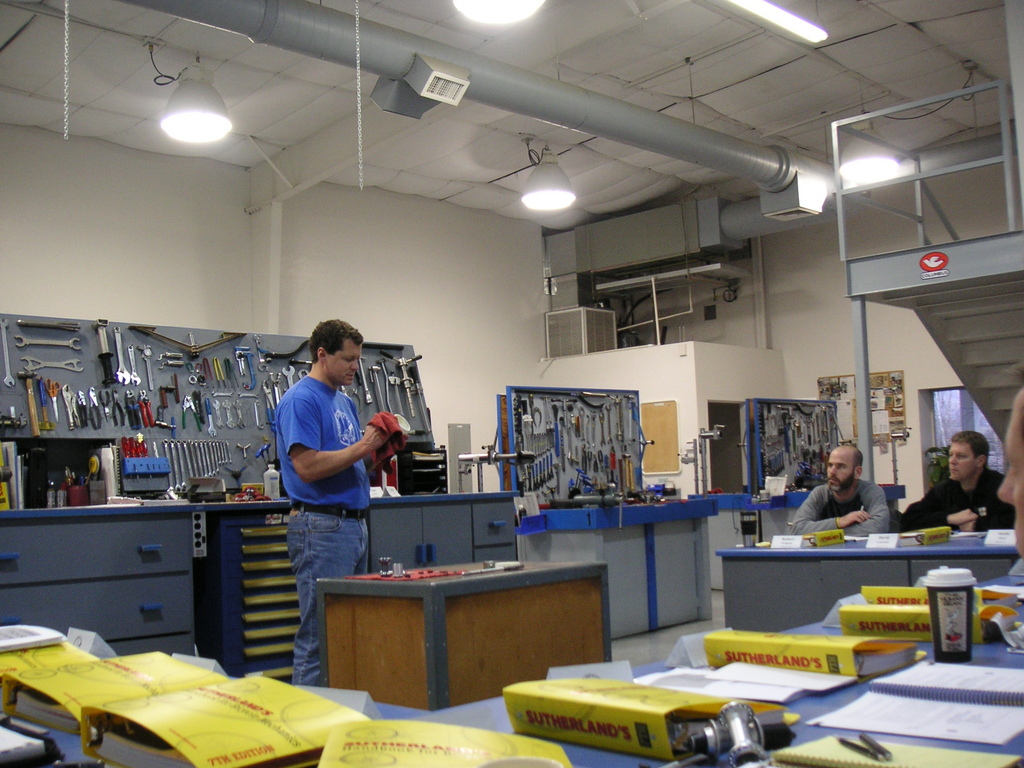 |
| Tim |
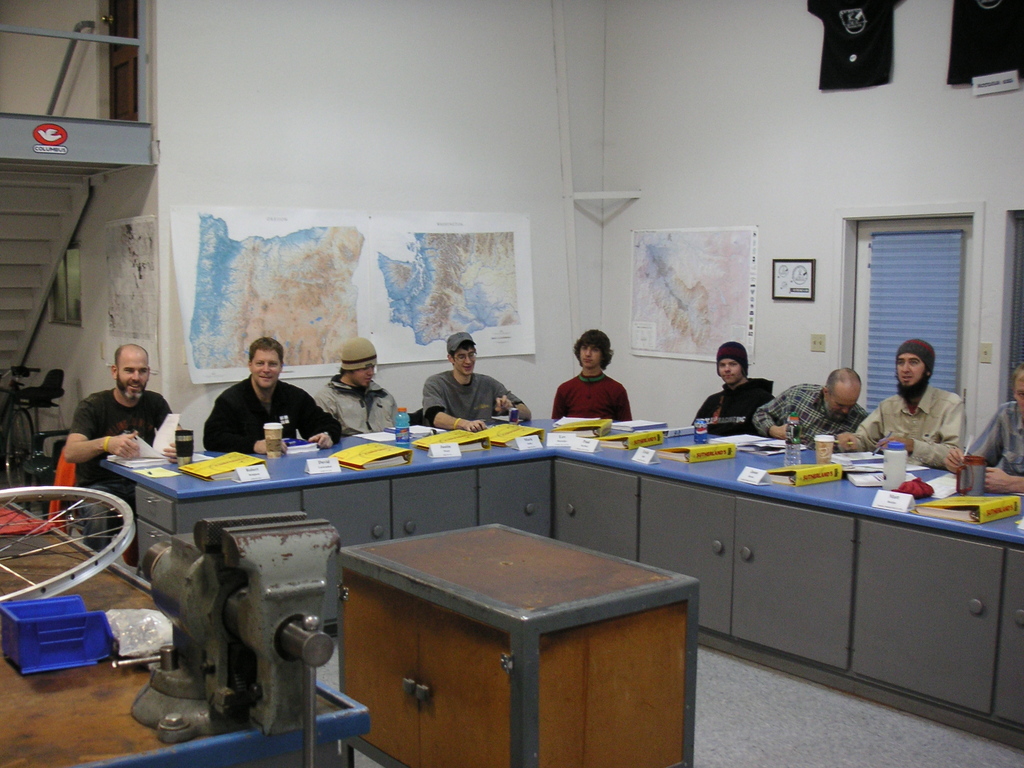
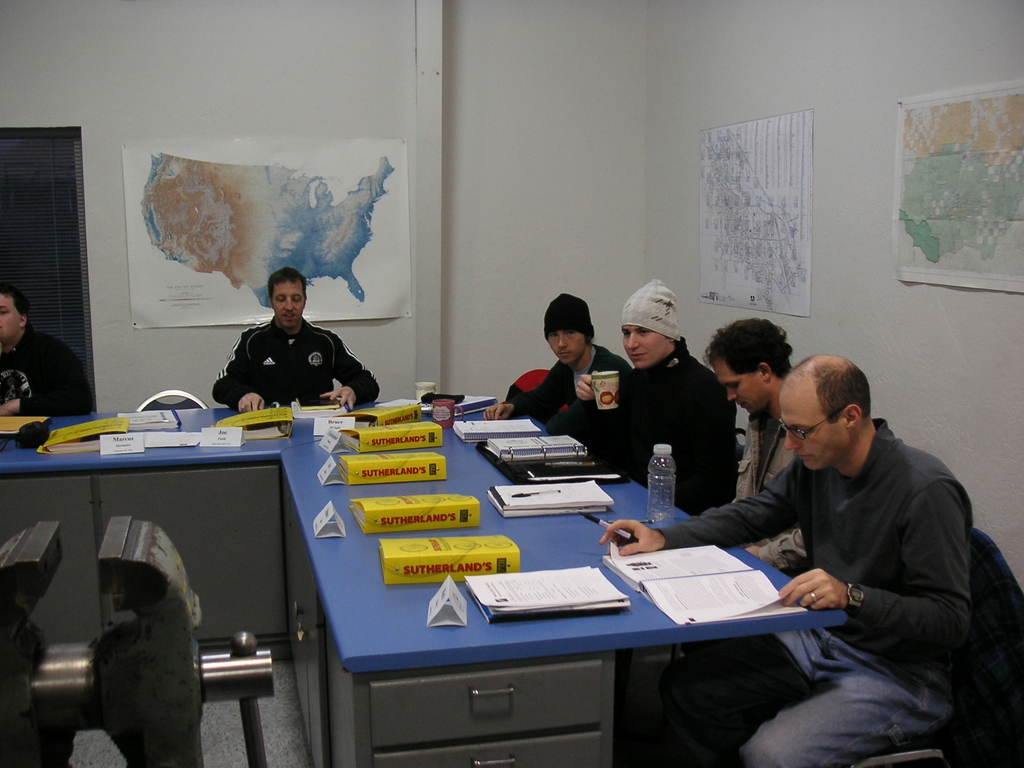
We introduced ourselves and told about our previous bike experience. Three or four of us work in bike shops, and several seemed to know a great deal about bikes. They were usually the ones with extensive experience in a shop who had enrolled in order to complete the certification. We were from Canada, Ohio, Minnesota, Massachusetts, Virginia, California, Utah, Washington, and Idaho.
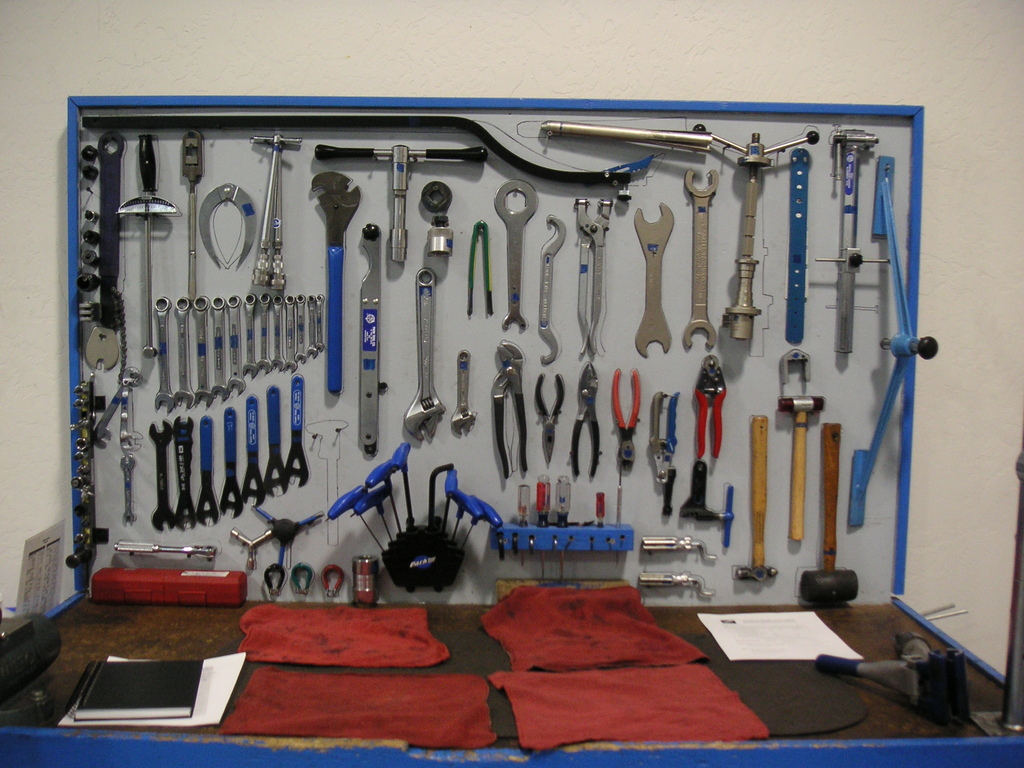 |
| One of 8 work benches |
We also overhauled a set of front and rear hubs, something I've done many times, usually incorrectly. I learned that the skewer exerts pressure on the hub axle, cones, and bearings in such a way that the initial adjustment must be slightly loose to compensate. I've always adjusted them with no play, and then placed the hub in the frame and closed the skewer, which results in a too-tight hub. This is why I came to bike school, to re-learn all those techniques that I learned incorrectly.
After class I walked to the town library to catch up on email and find out what was happening in the world, old habits that would slowly be broken during the two weeks. During a normal day at home, so much time is spent reading the newspaper, reading and writing email, reading news on the Internet, and watching the evening news. These habits were easily broken; there wasn't time. Class followed a rigid schedule, and there was little time for preparing dinner, reading about the following day's lesson, and getting a little exercise.
Dinners were usually slapped together from what was available. Ramen usually played a part in most meals. It was interesting to see the various ways that roommates prepared ramen, with chopped vegetables, prepared soup (after tossing the water in which the noodles were cooked), meat, and other items. It seemed that I was the only one who followed the cooking directions and actually used the enclosed spice packet. Signs of a real ramen novice I suppose.
Previous | Next